What is the water absorption of terrazzo?

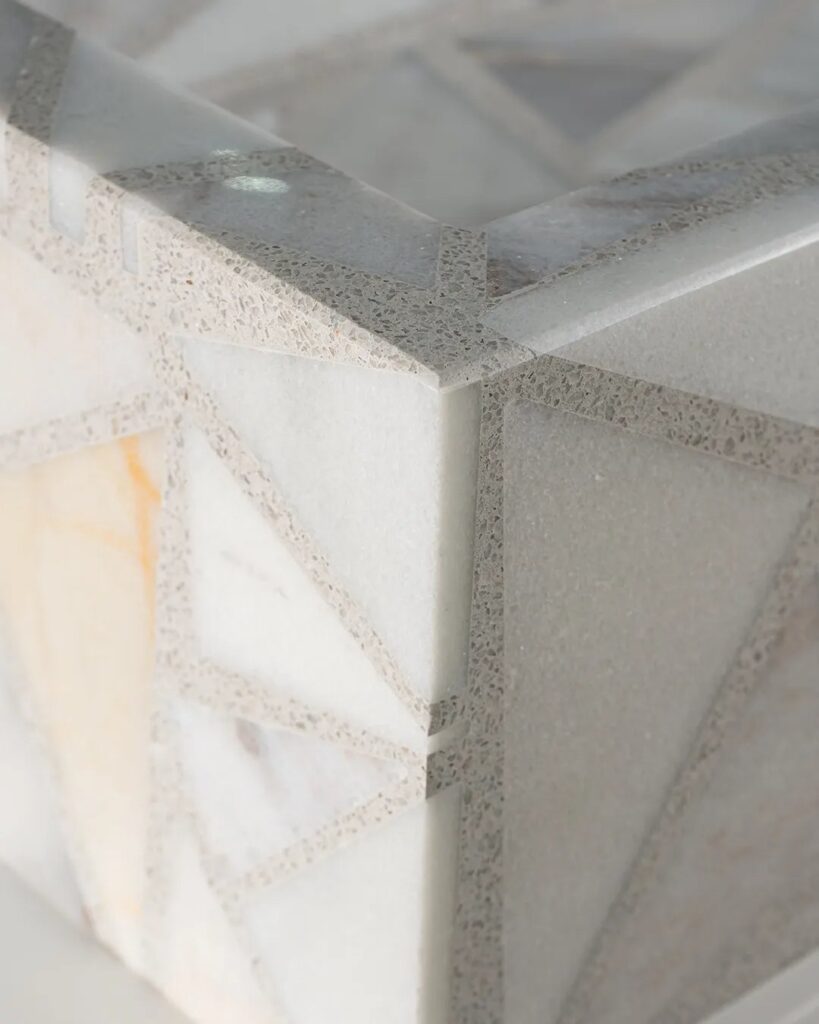
Reference photographs. They show the material and the finish; they are not photographs of goods we made, and the colour on screen is not a colour-match.
The figures, and where each one comes from
| Process | Published absorption | Consequence |
|---|---|---|
| Cement-bound | commonly 0.3-0.6% | needs sealing in wet areas |
| Poured | commonly 0.3-0.6% | needs sealing in wet areas |
| Epoxy | near nil | sealed by the binder |
| Precast (cement) | commonly 0.3-0.6% | needs sealing in wet areas |
| Porcelain | near zero | no sealing needed at all |
Why the processes are not interchangeable
Absorption is the number behind the sealing decision. A cement matrix is porous because it is cement, so it takes water until it is sealed; a resin binder does not have that structure. The two are frequently quoted with one figure between them, which is how a resin floor ends up specified as though it needs a sealer.
What these figures are, and what they are not
⛔ THE RIGHT-HAND SIDE IS EMPTY BECAUSE WE HAVE NOT TESTED IT.
These ranges are published. We hold no absorption figure for a panel we made, and we will not put a number in that column until a test report says so. Published and measured are different claims and this site keeps them apart.
If you are specifying this
We have not published products against this question yet. Send us the process, thickness and quantity and we will quote it against what we can actually form, rather than against a catalogue.