Can terrazzo be repaired?

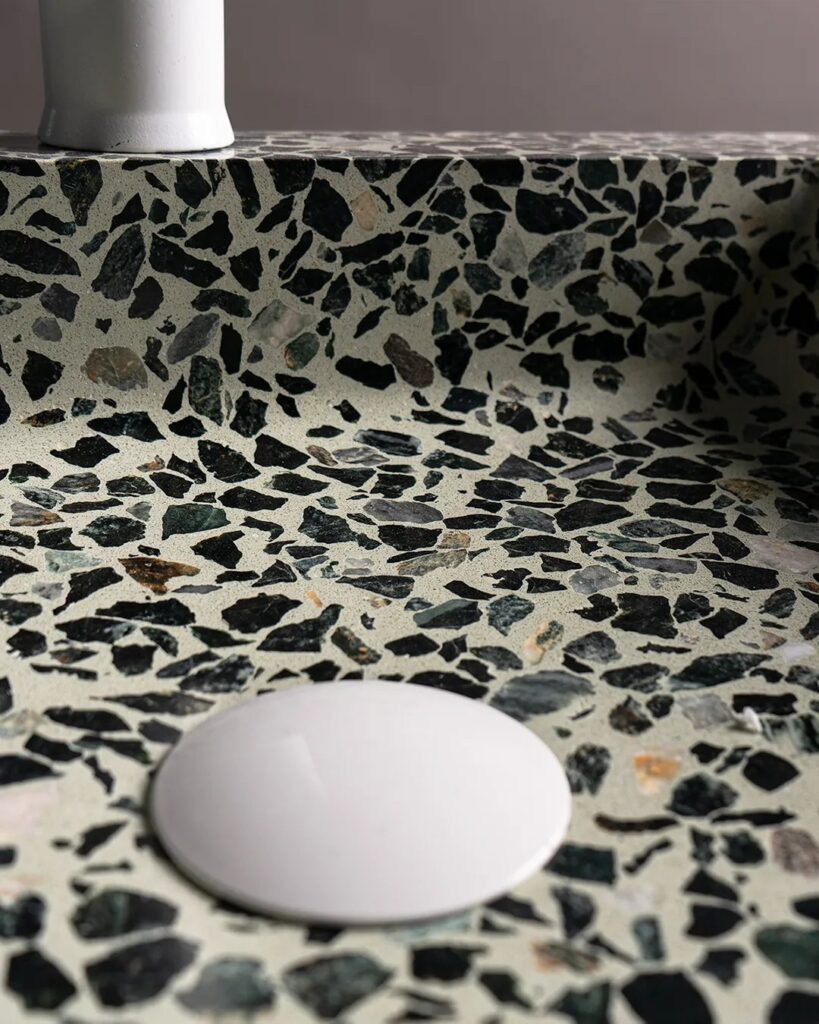
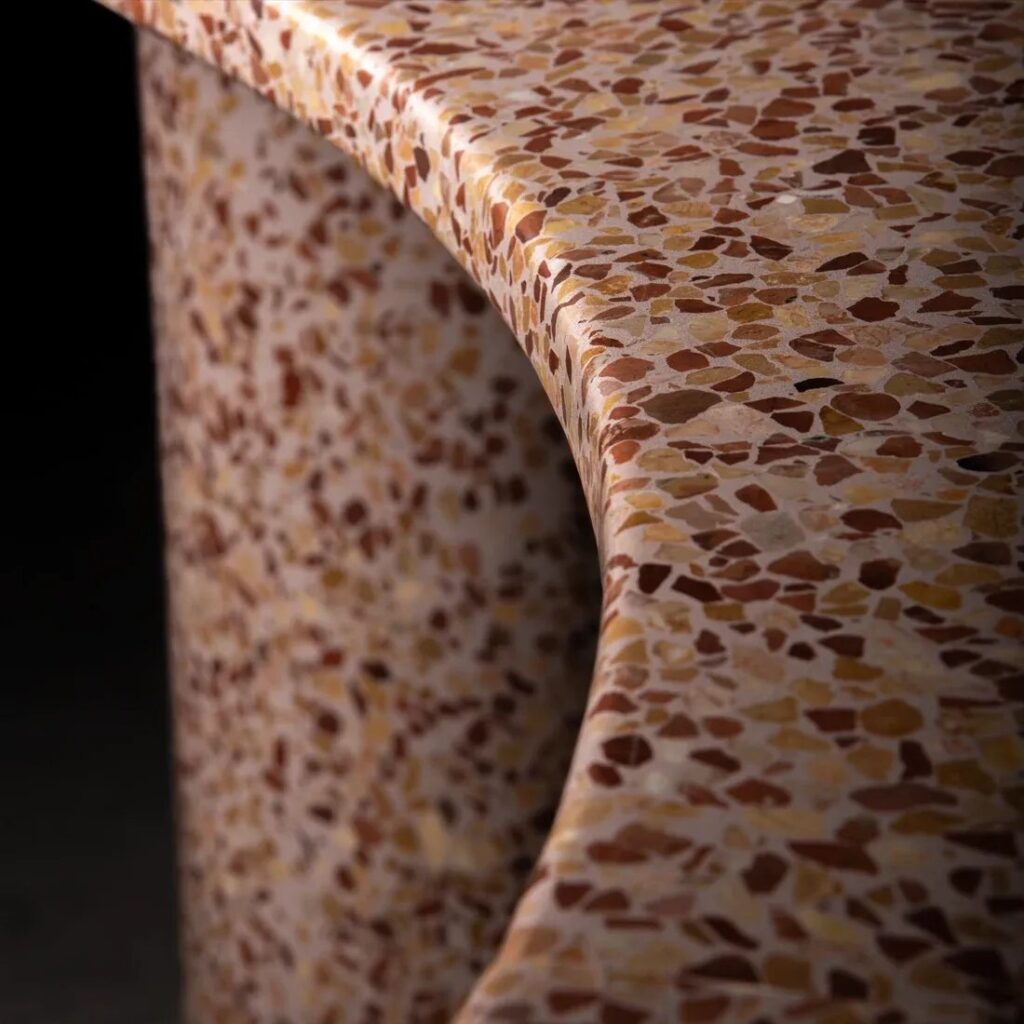
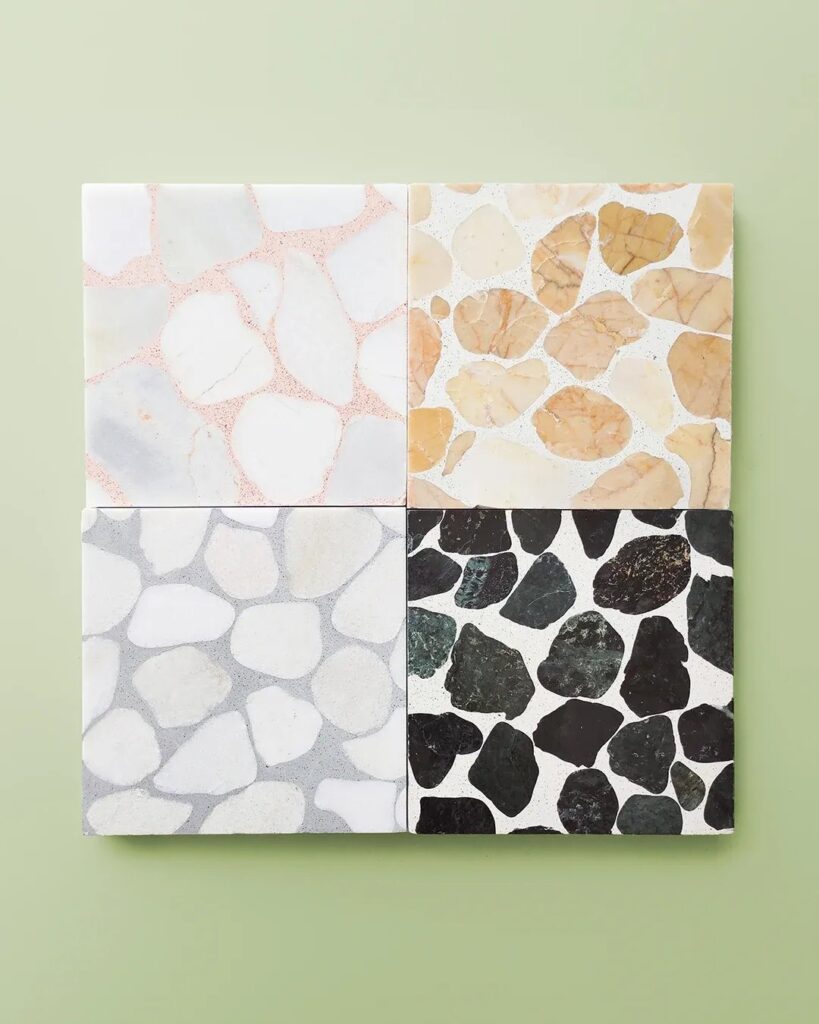
Reference photographs. They show the material and the finish; they are not photographs of goods we made, and the colour on screen is not a colour-match.
The figures, and where each one comes from
| Item | What the trade publishes | Source |
|---|---|---|
| Chip or gouge, cement matrix | cement grout plus matched terrazzo topping; 40 then 80 grit sanding; penetrating sealer pH 7 to 10 | GSA Preservation Note |
| Chip or gouge, resin matrix | two-component epoxy with matched aggregate, forced into the void; grind flush | GSA Preservation Note |
| Crack wider than 1/4 inch | use aggregate, not filler alone | GSA Preservation Note |
| Grouting cure | minimum 72 hours, ambient 70 to 80 F | GSA Preservation Note |
| Epoxy set before walking | minimum 24 hours | SFGate repair guide |
| Divider strips | retain where possible; replace in solid metal matching size, colour, sheen | GSA Preservation Note |
| Joint at a repair edge | saw-tooth, with loose matching chips while the resin is still wet | GSA Preservation Note |
| Grinding across a patch | 24 grit or finer in water, then 80 or finer; avoid divider strips | GSA Preservation Note |
| Epoxy matrix and UV | epoxy alone yellows; an aliphatic polyurethane sealer is required where UV reaches the floor | Manufacturer CSI spec |
| Cement matrix and acid | alkaline and acid-reactive; acid attack is a substrate question, not a cleaning one | Stone Polishing Solutions |
Why the processes are not interchangeable
Terrazzo is a through-body material, so a damaged surface is ground back rather than replaced. That is true of both a cement and a resin matrix, and it is the one capability no tile has: a chipped porcelain tile is replaced, a chipped terrazzo floor is patched.
What these figures are, and what they are not
We have not repaired a floor and measured the result. The procedure below is the GSA one, not ours. What we do is supply the matrix and the aggregate to match an existing floor, and we will tell you when the honest answer is that the floor needs replacing.
If you are specifying this
We have not published products against this question yet. Send us the process, thickness and quantity and we will quote it against what we can actually form, rather than against a catalogue.
Yes, and it is the reason this material is worth specifying. A chip is filled with a mix matched to the existing matrix and aggregate, ground flush and sealed. The US General Services Administration publishes the procedure. What it does not do is fix movement — a crack caused by a slab still moving will come back.
Terrazzo is a through-body material, so a damaged surface is ground back rather than replaced. That is true of both a cement and a resin matrix, and it is the one capability no tile has: a chipped porcelain tile is replaced, a chipped terrazzo floor is patched.