Do terrazzo floors need to be sealed?
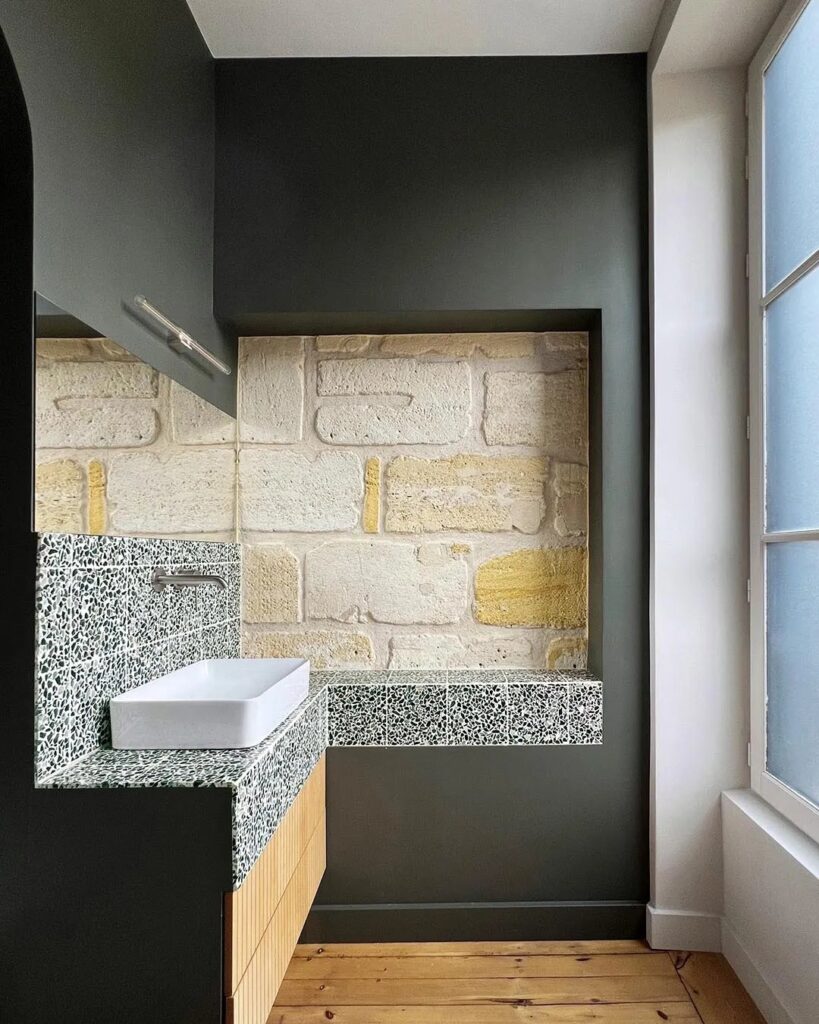

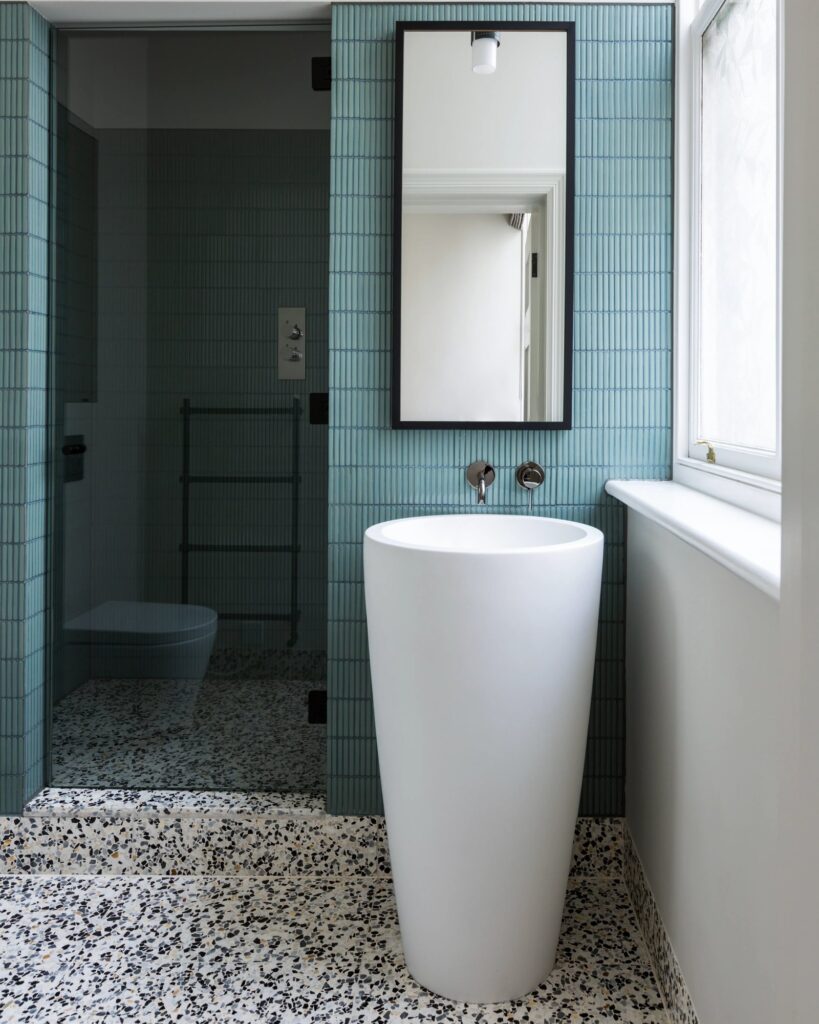

Reference photographs. They show the material and the finish; they are not photographs of goods we made, and the colour on screen is not a colour-match.
The figures, and where each one comes from
| Item | What the trade publishes | Source |
|---|---|---|
| Cement-bound, first seal | about 12 hours after installation | NTMA trade guidance |
| Cement-bound, coats | two or more | NTMA trade guidance |
| Cement-bound, gloss sheen lasts | 45 to 60 days before recoat | NTMA trade guidance |
| Epoxy, first seal | at least two coats after installation | Published CSI specifications |
| Epoxy, porosity | non-porous; sealer is for stain and UV, not permeability | Published CSI specifications |
| Cleaner pH | 7 to 10, neutral | NTMA trade guidance |
| Sealer slip rating | UL classified, minimum 0.5 | NTMA trade guidance |
| Reseal, high traffic | every 1 to 3 years | Wayon commercial guide |
| Reseal, high traffic | every 6 to 12 months | Milestone commercial guide |
| Reseal, moderate traffic | every 12 to 18 months | Milestone commercial guide |
| Reseal, residential | every 3 to 5 years | D&G Flooring guide |
| Full re-grind to 800 grit | roughly every 20 to 30 years | D&G Flooring guide |
Why the processes are not interchangeable
A cement matrix is porous; a resin matrix is not. That single difference decides whether sealing is about stopping water getting in or about stopping stains landing on the surface, and it is why the two answers are not variants of each other.
What these figures are, and what they are not
We have no measured figure of our own. Everything below is published guidance from the trade, and where two sources disagree we print both rather than choose. What we will do is quote you the sealer we supply, state its coverage rate, and put it in the contract.
If you are specifying this
We have not published products against this question yet. Send us the process, thickness and quantity and we will quote it against what we can actually form, rather than against a catalogue.
Yes, a cement-bound floor does, and the timing is measured in hours not weeks: the trade guidance is a penetrating sealer applied about 12 hours after installation, with two coats as standard. A resin-bound epoxy floor is a different case — it is non-porous, so it needs a sealer for stain resistance and UV protection rather than for permeability.
A cement matrix is porous; a resin matrix is not. That single difference decides whether sealing is about stopping water getting in or about stopping stains landing on the surface, and it is why the two answers are not variants of each other.