Is terrazzo better than marble?
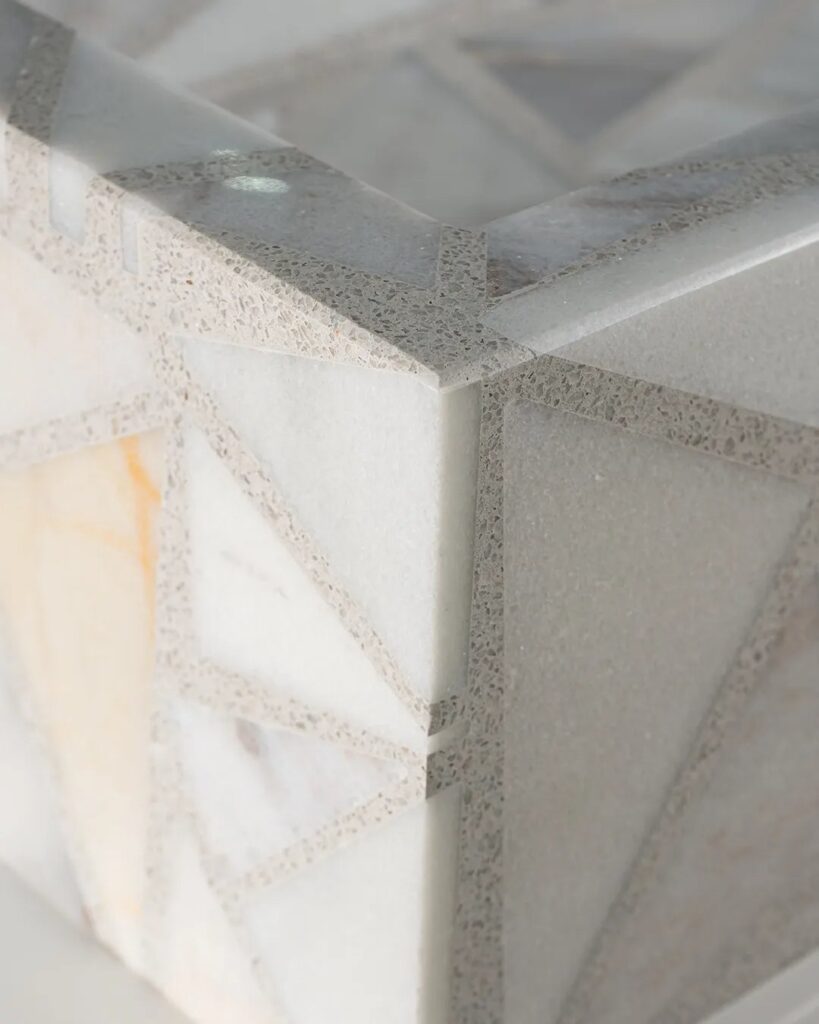

Reference photographs. They show the material and the finish; they are not photographs of goods we made, and the colour on screen is not a colour-match.
The figures, and where each one comes from
| Property | Terrazzo | Marble |
|---|---|---|
| Hardness | harder, engineered | softer, natural |
| Acid resistance | unaffected | etches on contact |
| Variation | low, repeatable | high, slab to slab |
| Repairability | patch and re-ground | patch, but the match is visible |
| Slip | matte finish available | honed available, still slippery wet |
Why the processes are not interchangeable
The etching difference is the one that decides most projects. Marble dissolves on contact with lemon juice, wine and most household cleaners, and the mark is not removable — it is a loss of surface, not a stain. Terrazzo does not care. In a kitchen or a bar, that single fact usually settles the question before any other criterion is reached.
What these figures are, and what they are not
No figure here is ours. Hardness is measured on the Mohs scale and published values differ between binders and between aggregate mixes; this table states the relationship and not a number, because a number here would be quoting somebody else's test of somebody else's slab.
If you are specifying this
We have not published products against this question yet. Send us the process, thickness and quantity and we will quote it against what we can actually form, rather than against a catalogue.