How do you get a stain out of terrazzo?
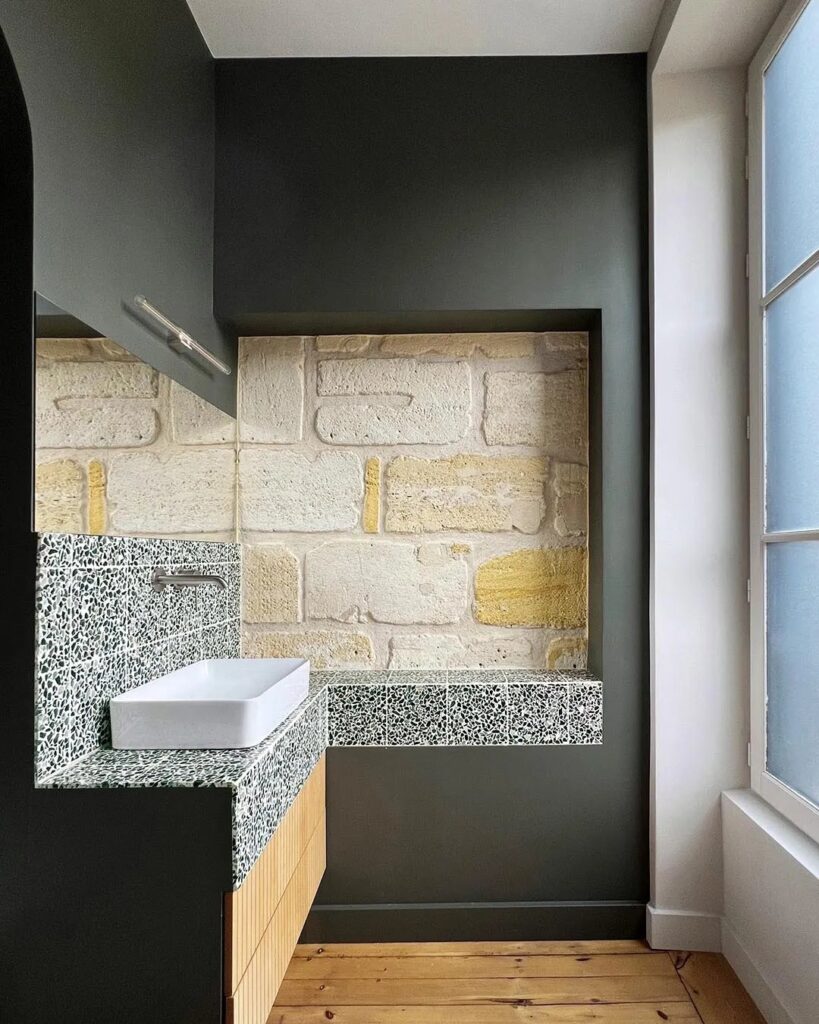
Reference photographs. They show the material and the finish; they are not photographs of goods we made, and the colour on screen is not a colour-match.
The figures, and where each one comes from
| What the mark is | What to do |
|---|---|
| Dirt and ordinary soil | neutral pH detergent and water |
| Oil on an unsealed matrix | a poultice drawn over it, then seal |
| An acid-etched area | ⛔ not removable. Ground back, which is a different job |
| Paint | mechanical removal, then seal; mind the joint lines |
| An epoxy floor | solvent-free method; a resin will haze |
Why the processes are not interchangeable
The distinction that matters is whether the mark is in the sealer or in the cement under it. A cement terrazzo is graded stone in a matrix that absorbs, so an unsealed floor takes pigment into the matrix and it stays there; a sealed one does not, which is why the sealer is maintenance rather than decoration. The case that cannot be undone is an acid. Acid does not sit on a cement surface, it reacts with it, so the dull patch is a chemically thinned layer — and a stronger product used on it removes more. The instinct to escalate is the thing that turns a mark into a floor that has to be ground.
What these figures are, and what they are not
This page describes materials and what they do with chemicals. ⛔ We give no product, concentration or dwell time and we do not sell a cleaning product; ⛔ send a photograph before you buy anything and we will tell you which of the two situations you have — a mark that can be cleaned, or one that needs grinding.
If you are specifying this
These are the forms we actually supply for this question, with production photographs where we have them: