Is terrazzo a good bathroom floor?
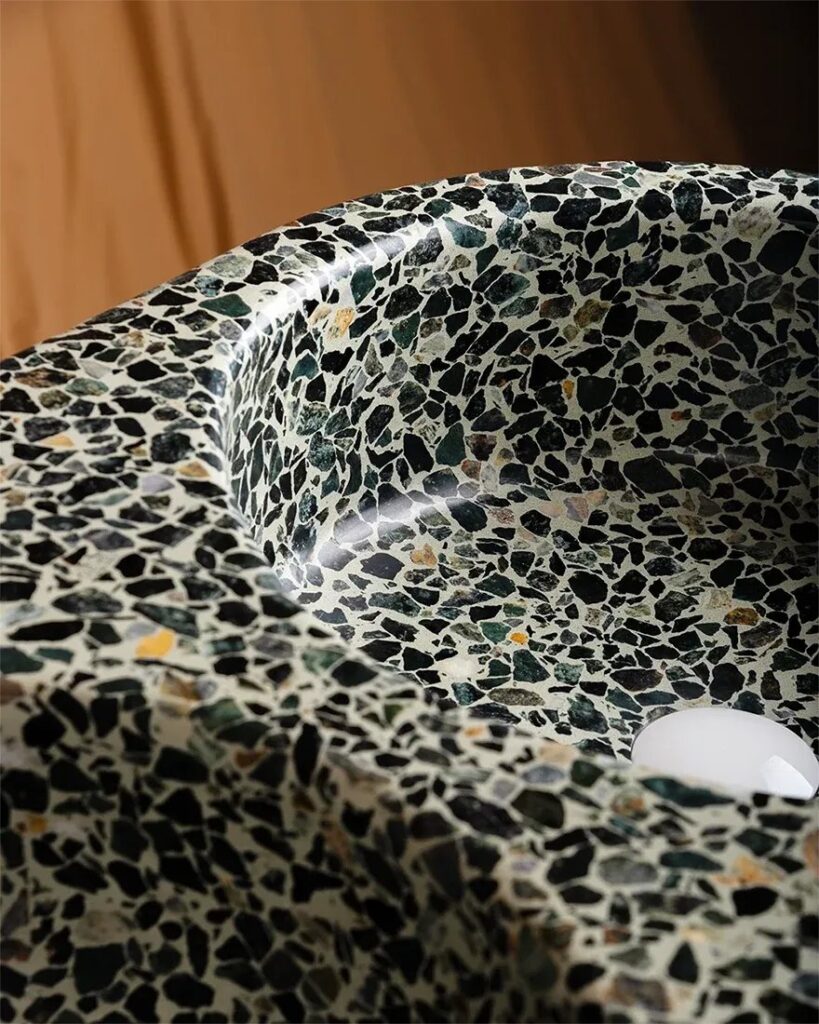
Reference photographs. They show the material and the finish; they are not photographs of goods we made, and the colour on screen is not a colour-match.
The figures, and where each one comes from
| Where in the room | What to specify |
|---|---|
| Shower floor and wet area | matte or honed, or an anti-slip treatment |
| Dry area of the floor | polished is acceptable where it stays dry |
| Walls and splashback | resin terrazzo, which does not absorb |
| Sealed or not | sealed, and the sealer refreshed on the cycle the grade needs |
Why the processes are not interchangeable
Terrazzo in a bathroom is a question about water and about grip, and the two are connected. A cement matrix is porous by definition — the Chinese grades run from 8.0 per cent absorption downward — so a bathroom terrazzo is a sealed floor, and the sealer is what makes wet cleaning possible at all. On top of that, the polish that makes terrazzo worth specifying is the same gloss that makes a wet floor dangerous. Resin-bound terrazzo solves part of this because it absorbs almost nothing and is normally used on walls, which is why it is the usual answer for a shower enclosure.
What these figures are, and what they are not
The absorption figures are JC/T 507-2022 table 7. ⛔ The slip discussion is behavioural: EN 13748-1 includes a method for the unpolished slip resistance value and its scope was read, but ⛔ we have not obtained the standard and no slip number appears here. ⛔ We have not tested a wet surface of ours, so no slip rating is offered.
If you are specifying this
These are the forms we actually supply for this question, with production photographs where we have them: