How do you make a polished terrazzo floor safe?
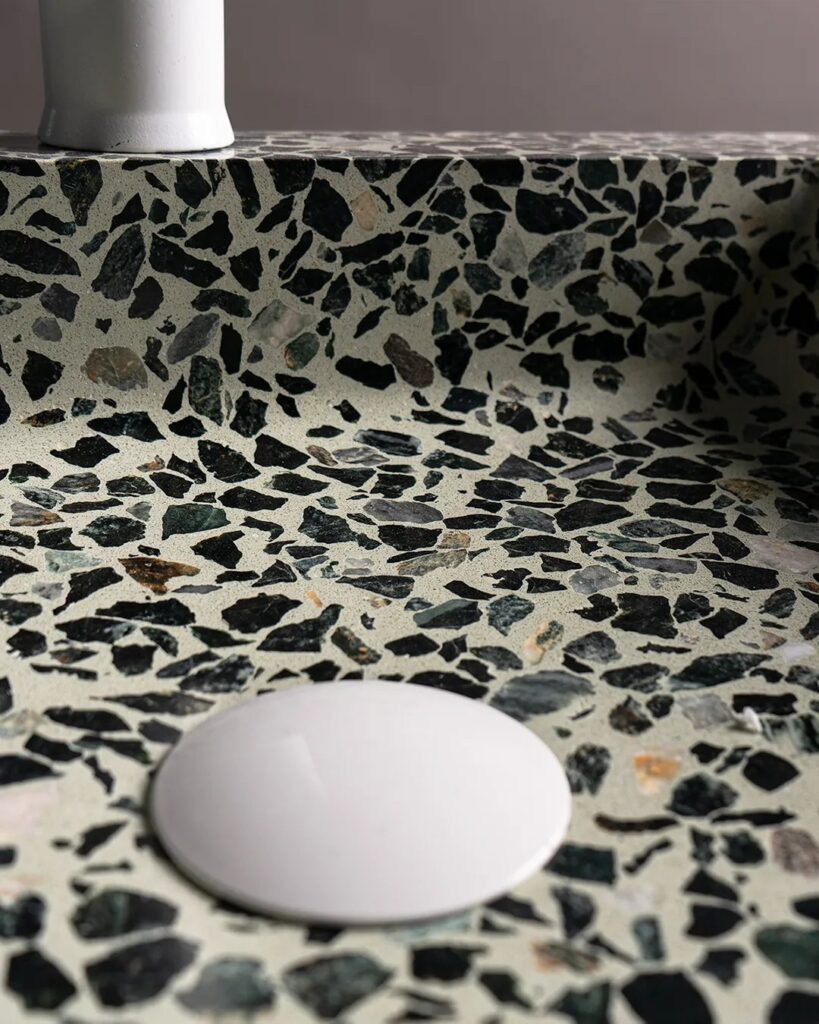
Reference photographs. They show the material and the finish; they are not photographs of goods we made, and the colour on screen is not a colour-match.
The figures, and where each one comes from
| Use category under ANSI A326.3 | Minimum wet DCOF | Where |
|---|---|---|
| Interior, dry (ID) | 0.42 | rooms with no water source |
| Interior, wet (IW) | 0.42 | bathrooms, kitchens, entrances, public restrooms |
| Interior, wet plus (IW+) | 0.50 | public showers, locker rooms, pool surrounds |
| Exterior, wet (EW) | 0.55 | maintained outdoor areas |
| Oils and greases (O/G) | 0.55 | kitchens and greasy spaces |
Why the processes are not interchangeable
Terrazzo does not slip because of terrazzo; it slips because of the polish, and a polish is a mirror whatever the stone under it. That makes the decision a specification made at the finish stage and very hard to reverse — a floor ground to a high polish and then found slippery in the wet has two routes back and both involve taking it down. Three things have to travel with the number or it will be misused. The instrument is the BOT-3000E tribometer specifically, not a pendulum and not a drag sled. ANSI A326.3 states plainly that it makes no claim of correlation to actual footwear or to human walking, so 0.42 is a material property and not a prediction about a person in shoes. And the standard sets no value for a shower floor at all — that category is left to a manufacturer declaration.
What these figures are, and what they are not
The categories and thresholds are ANSI A326.3, read from three independent sources that agree. ⛔ Two cautions travel with them and are repeated above: A326.3 specifies the BOT-3000E instrument, and it states no correlation to footwear or walking. ⛔ ASTM C1028, the older static method, was withdrawn — a report that still cites it is quoting a retired method. EN 13748-1 includes an unpolished slip resistance method and its scope was read, but ⛔ we have not obtained the standard and no European value appears here. ⛔ We have not tested a wet surface of ours and hold no DCOF result.
If you are specifying this
These are the forms we actually supply for this question, with production photographs where we have them: