Is terrazzo in style?
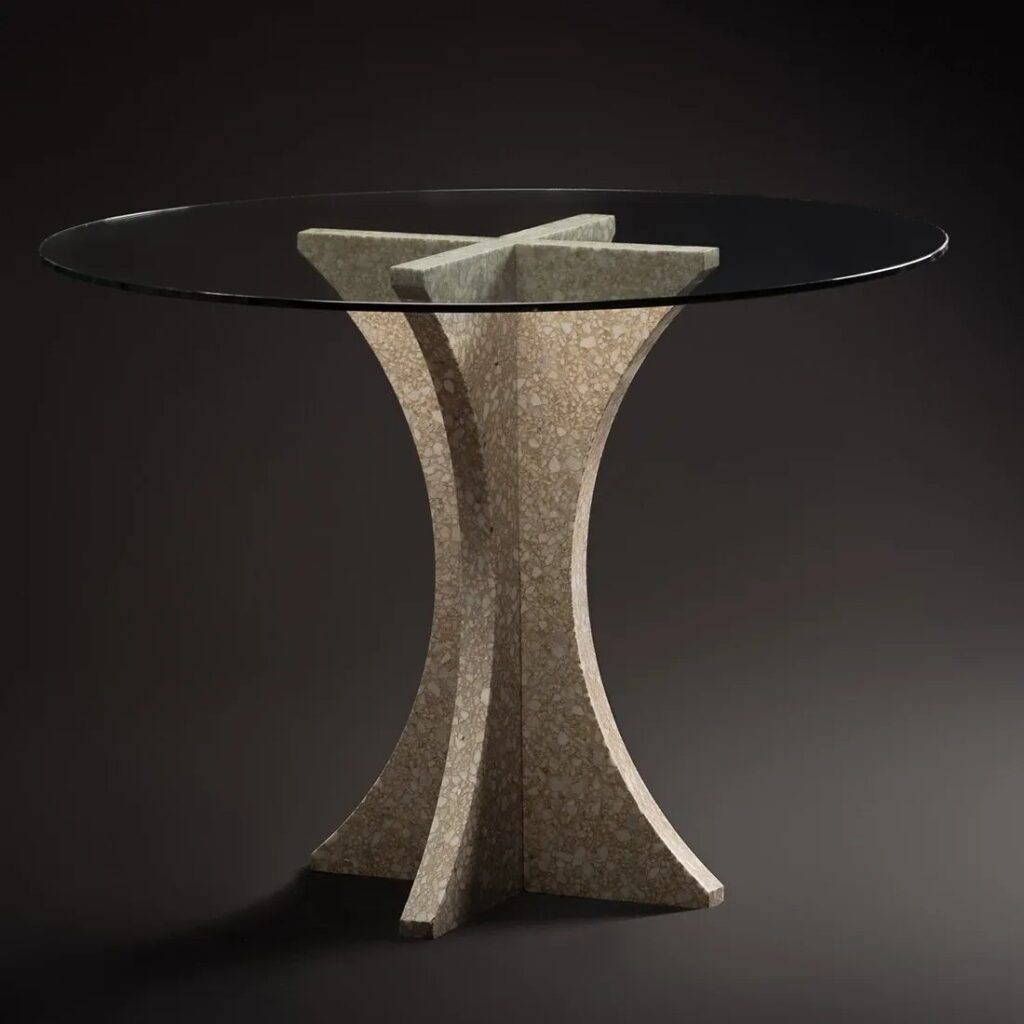

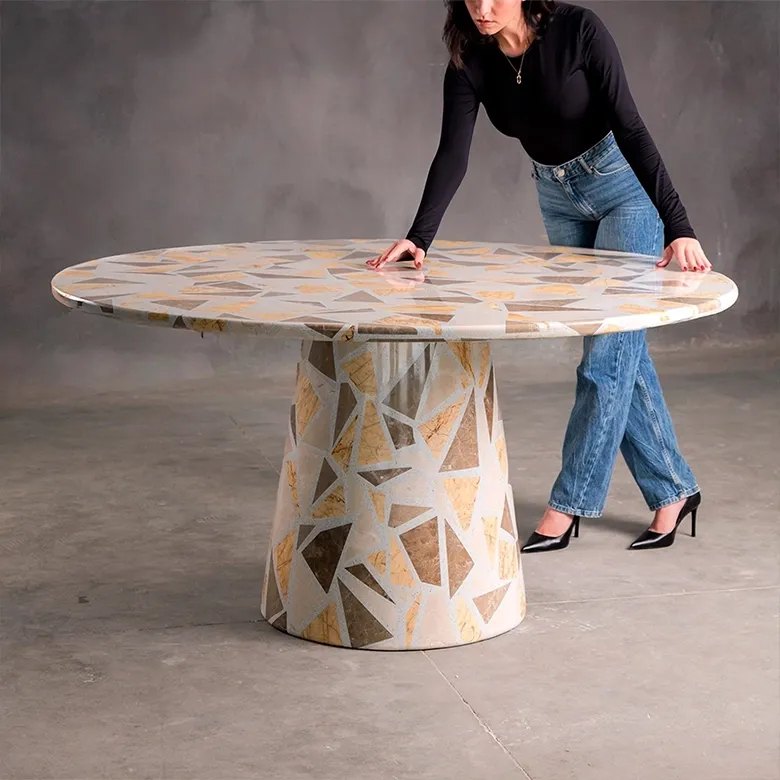
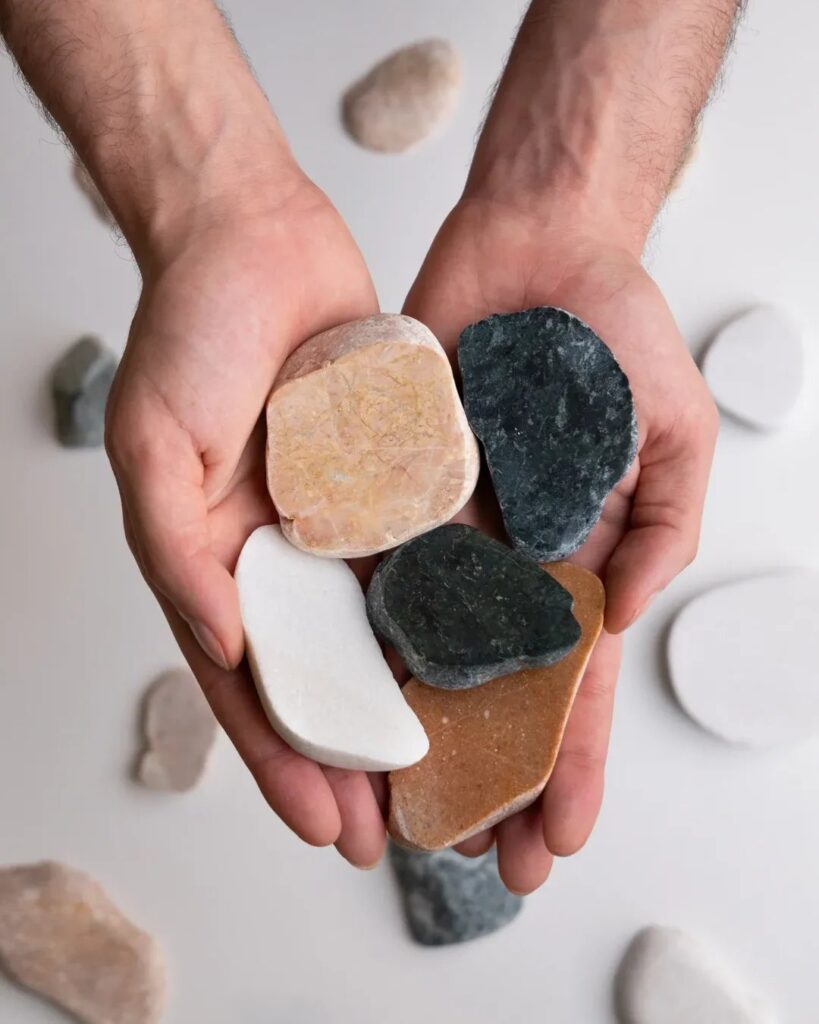
Reference photographs. They show the material and the finish; they are not photographs of goods we made, and the colour on screen is not a colour-match.
The figures, and where each one comes from
| Item | What is published | Source |
|---|---|---|
| Origin | 15th-century Venice; mosaic workers set marble offcuts into mortar | Terrazzo Specialist restoration guide |
| Origin, competing account | composite flooring in present-day Turkey, 10,000-8,000 BCE | Terrazzo Specialist restoration guide |
| Origin, third account | 16th-century Venice | Tasting Table, citing design press |
| Name | from the Italian terrazza, meaning terrace | Terrazzo Specialist; Mariot |
| First sealer | goats milk, which brought out the colour of the chips after polishing | Mariot design history |
| Formal trade | 1583, the Venetian Council of Ten granted Friulian craftsmen the right to establish a school of the trade | NTMA guild history |
| Arrival in the United States | 1890s, brought by Italian immigrant craftsmen | NTMA, via Nova Tile |
| The change that made it cheap | the electric grinder, 1924 | NTMA, via Nova Tile |
| Where it went next | within a decade of 1924 it was the floor of American modernism: Radio City Music Hall, the Guggenheim Museum, the Space Needle | NTMA, via Nova Tile |
| The 1920s construction changes | metal divider strips controlled cracking and allowed pattern; Art Deco and Streamline Moderne | Terrazzo Specialist restoration guide |
| Landmark sites | Empire State Building, Radio City Music Hall, Hoover Dam, Hollywood Walk of Fame | Terrazzo Specialist restoration guide |
| Earlier American sites | including George Washington's Mount Vernon | Terrazzo Specialist restoration guide |
| Service life | properly maintained terrazzo floors routinely remain serviceable for a century or more | Terrazzo Specialist restoration guide |
| The last fall | peak in the 1970s-90s, then declined over on-site complexity, difficulty cleaning and cracking | SDS decorative flooring |
| What brought it back | epoxy and polymer binders: wider colour range, chemical resistance, thinner and lighter | Mariot design history |
| What changed this cycle | oversized aggregate, 2 to 3 inch fragments, against older uniform fine chips | Soft Goods Design |
| Colour direction, 2026 | creamy whites with warm aggregate; deep charcoal with amber flecks; pale sage with rose | Original Mission Tile, 2026 trend review |
| Colour direction, 2026 | leaving pastels for emerald, rust, ochre and deep blue on pale cements | Soft Goods Design |
| Where it is being used now | floors, then counter tops, splashbacks, wall panels, furniture, basin and sink units | Soft Goods Design; Better Homes & Gardens |
| In China | arrived at the end of the Qing; used in hospitals, schools, department stores and the Beijing Metro from the 1960s to the 1980s | Baidu Baike, terrazzo |
| In China | dropped in the 1990s as tile got cheaper and easier to maintain; back with resin binders | Baidu Baike, terrazzo |
| Preservation standard | historic materials are to be retained and repaired where feasible; new work should match the historic material in design, colour, texture and composition | US Secretary of the Interior's Standards |
| One note, 2026 | "a natural, organic texture that adds a sense of quiet luxury to a kitchen" | Ruth Milne, Studio Milne, in Homes & Gardens |
| One note, 2026 | "embodies craftsmanship, longevity, and playfulness — three attributes homeowners crave today" | Jasmine Jhaveri, in Tasting Table |
| One note, 2026 | "we're seeing it on shower walls, vanities, even integrated sinks" | Jill Siegel, bathroom design, in Better Homes & Gardens |
Why the processes are not interchangeable
Style is a cycle; the material is not. Terrazzo has been laid, admired, rejected and re-laid for over four hundred years, and the reason it survives each cycle is that the chip is a piece of real stone rather than a print of one, so an old floor cannot be dated by its pattern alone. What changes between cycles is the scale of the aggregate and the colour of the binder. That is the part a specification controls, and it is the part a buyer should decide rather than inherit.
What these figures are, and what they are not
Every figure and quotation below is published by somebody else — a trade guide, a heritage standard or a named designer. We are a processor, not a style authority, and we hold no view on what next January looks like. What we will do is tell you what the six processes actually let you specify, and quote you against a real batch.
If you are specifying this
We have not published products against this question yet. Send us the process, thickness and quantity and we will quote it against what we can actually form, rather than against a catalogue.