Does terrazzo stain?
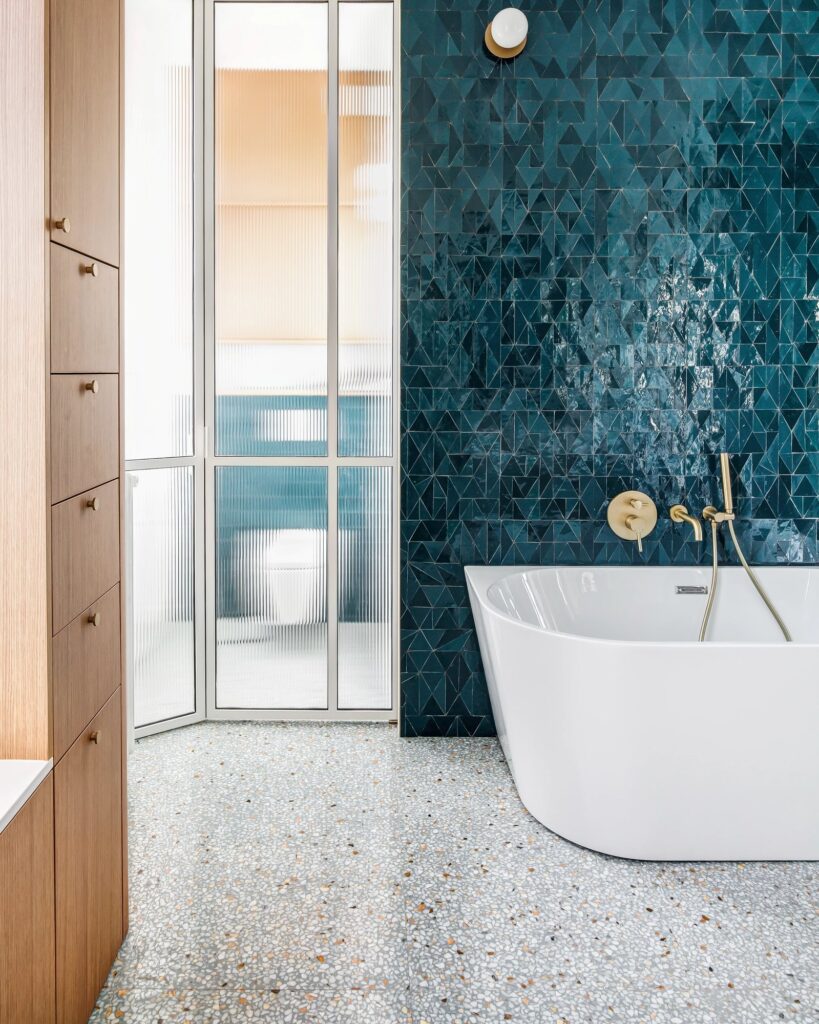
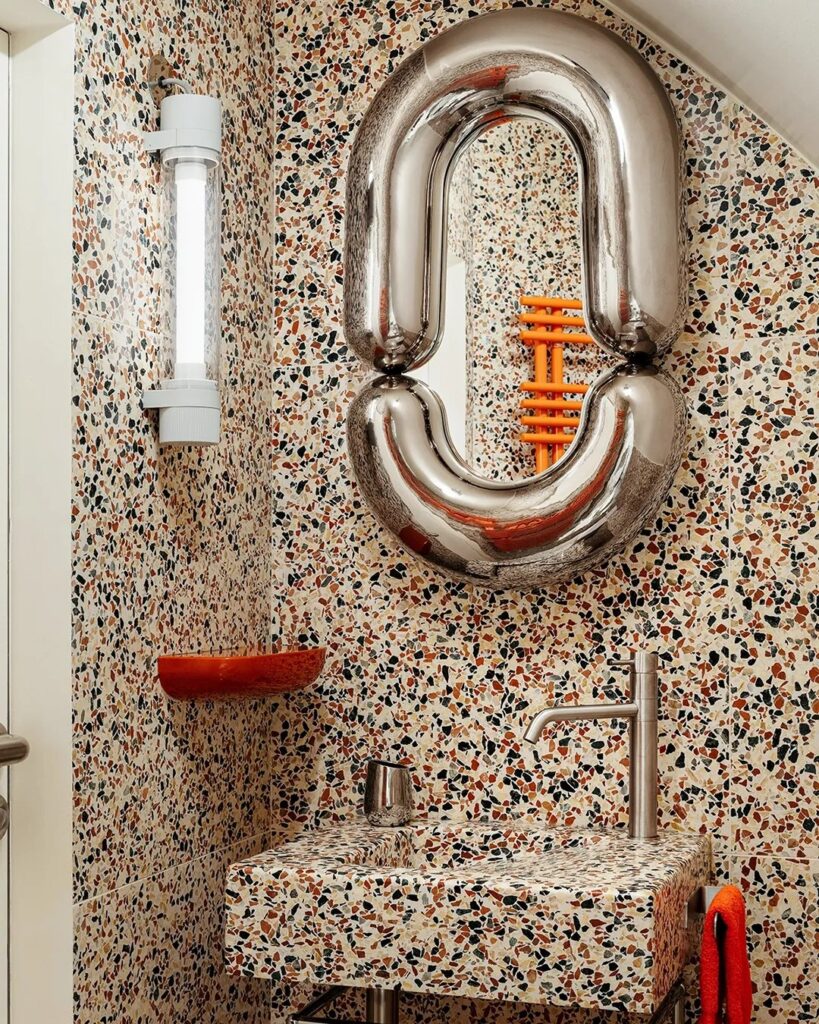

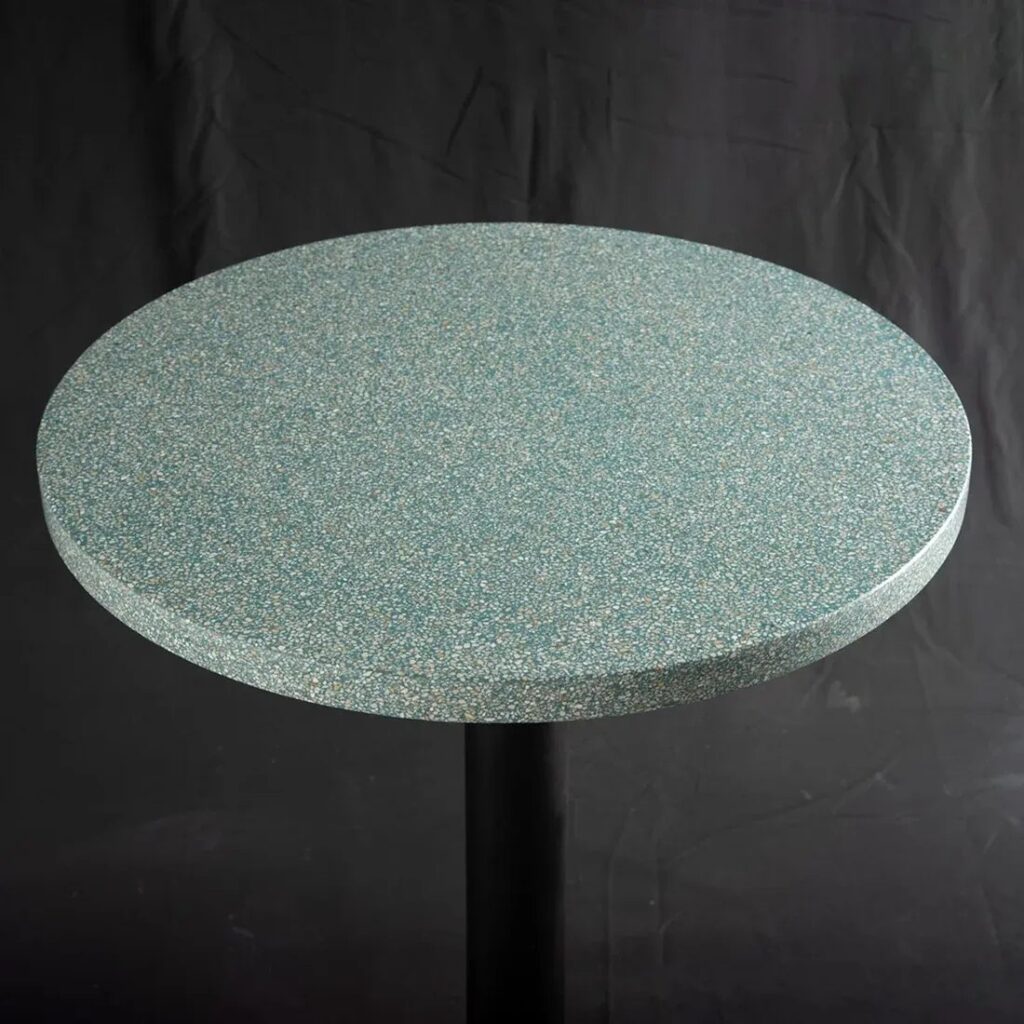
Reference photographs. They show the material and the finish; they are not photographs of goods we made, and the colour on screen is not a colour-match.
The figures, and where each one comes from
| Item | What the trade publishes | Source |
|---|---|---|
| Acid cleaners on cement terrazzo | below pH 6 etches irreversibly | Opora Supply field guide |
| Acid cleaners on cement terrazzo | removal cost 4 to 8 dollars per sq ft | Opora Supply field guide |
| Routine polish, neutral chemistry | 1.50 to 2.50 dollars per sq ft | Opora Supply field guide |
| Daily cleaner pH 5 on marble chips | visible etching within months | Opora Supply field guide |
| Restoration interval, correct pH 7-9 | 15 to 20 years | Opora Supply field guide |
| Restoration interval, routine acid use | 7 years | Opora Supply field guide |
| Cleaner pH, the whole range | strictly 7 to 9, no acid | Opora Supply field guide |
| Sealer re-application, cementitious | annually in food service and lobbies | Opora Supply field guide |
| Sealer re-application, epoxy | every 2 to 3 years | Opora Supply field guide |
| Sealer test | drip water, wait; if it darkens the sealer has worn through | Otesse cleaning guide |
| Coffee, tea, soda | low to moderate; wipe promptly | ABD Stone guide |
| Red wine | moderate; a good seal prevents absorption but wipe it | ABD Stone guide |
| Cooking oil and grease | moderate; dark stain if a seal is damaged | ABD Stone guide |
| Acids: vinegar, lemon, toilet cleaner | high — etching, not staining | ABD Stone guide |
| Ink, hair dye, permanent marker | high; effectively permanent | ABD Stone guide |
| Rust from wet metal legs | high; very difficult to remove | ABD Stone guide |
| Bleach | can dull the binder; never with acid or ammonia | Otesse cleaning guide |
| Oil-based soap and wax | builds a film that yellows and hides the material | Otesse cleaning guide |
| Cement matrix chemistry | alkaline, acid-reactive | Stone Polishing Solutions |
| Epoxy matrix chemistry | chemically tougher; yellows under UV | Stone Polishing Solutions |
| Epoxy matrix stain resistance | non-porous; lower stain risk, still etches at the chips | Otesse cleaning guide |
| Acid thresholds in Indian code | level anti-slip thresholds under about 12 mm | Studio Matrx, citing NBC 2016 |
Why the processes are not interchangeable
Terrazzo is two materials at once: chips that are usually marble, and a binder that is either cement or epoxy. Both are calcium-carbonate chemistry or alkaline, and acid attacks both. A resin binder survives much better than cement, but the chips are still stone and they still etch. So "which terrazzo do I have" changes how bad it is, never whether it can happen.
What these figures are, and what they are not
Every figure below is published by the trade, not measured by us. We have not stained a panel and we hold no test report. What we do is specify the binder, the finish and the sealer in writing and tell you what the cleaning regime has to be for that specification to hold.
If you are specifying this
We have not published products against this question yet. Send us the process, thickness and quantity and we will quote it against what we can actually form, rather than against a catalogue.
Sealed, it resists most things quickly wiped up. It does not resist acid, and acid is not a stain — it dissolves the marble aggregate and the cement matrix and the repair is a full diamond grind. That is the whole answer in one sentence, and it is the reason the sealer and the cleaning chemistry are quoted together rather than separately.
Terrazzo is two materials at once: chips that are usually marble, and a binder that is either cement or epoxy. Both are calcium-carbonate chemistry or alkaline, and acid attacks both. A resin binder survives much better than cement, but the chips are still stone and they still etch. So "which terrazzo do I have" changes how bad it is, never whether it can happen.