How strong is terrazzo?
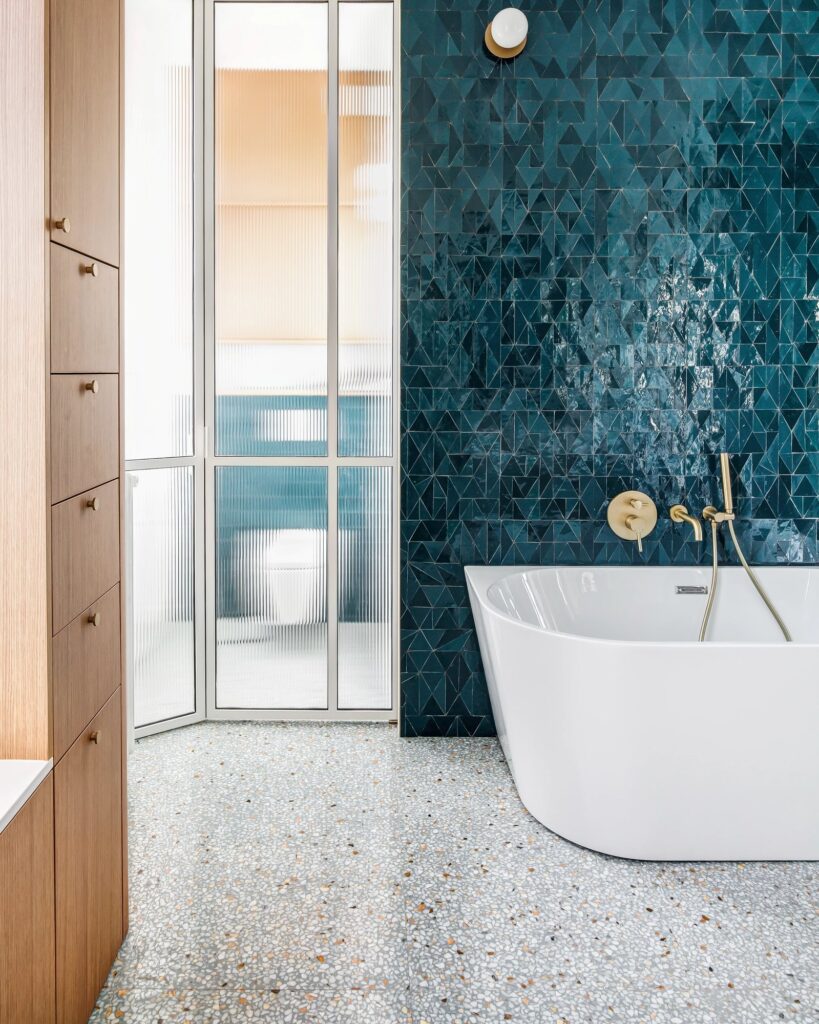
Reference photographs. They show the material and the finish; they are not photographs of goods we made, and the colour on screen is not a colour-match.
The figures, and where each one comes from
| Grade | Average | Single minimum | What the average is across |
|---|---|---|---|
| Standard terrazzo | 5.0 MPa | 4.0 MPa | five specimens |
| High-performance terrazzo | 8.0 MPa | 6.5 MPa | five specimens |
| Cement artificial stone | 10.0 MPa | 8.0 MPa | five specimens |
| High-performance cement artificial stone | 15.0 MPa | 12.0 MPa | five specimens |
Why the processes are not interchangeable
The test is a three-point bend on a 150 by 100 millimetre specimen cut from the product, laid on supports 100 millimetres apart and loaded at 30 to 50 newtons per second until it breaks. The value that comes out is a consequence of two things at once: how much cement matrix the mix has, and how deep the chip sits below the finished surface. A high chip load put the aggregate nearer the wearing face, and the aggregate is what carries load. That is the same reason a high chip-to-cement ratio and a high flexural figure travel together, and why specifying a figure without a mix is specifying half the answer.
What these figures are, and what they are not
The grades are from JC/T 507-2022 table 7 and the test method from clause 7.5.2 of the same standard. ⛔ These are the requirements the product must meet, not measurements of anything we have made. We hold no flexural test report on a panel we supplied.
If you are specifying this
These are the forms we actually supply for this question, with production photographs where we have them: